Ottonian illuminated manuscripts were beautiful books that helped show how rulers shared divine authority with the church’s blessing.
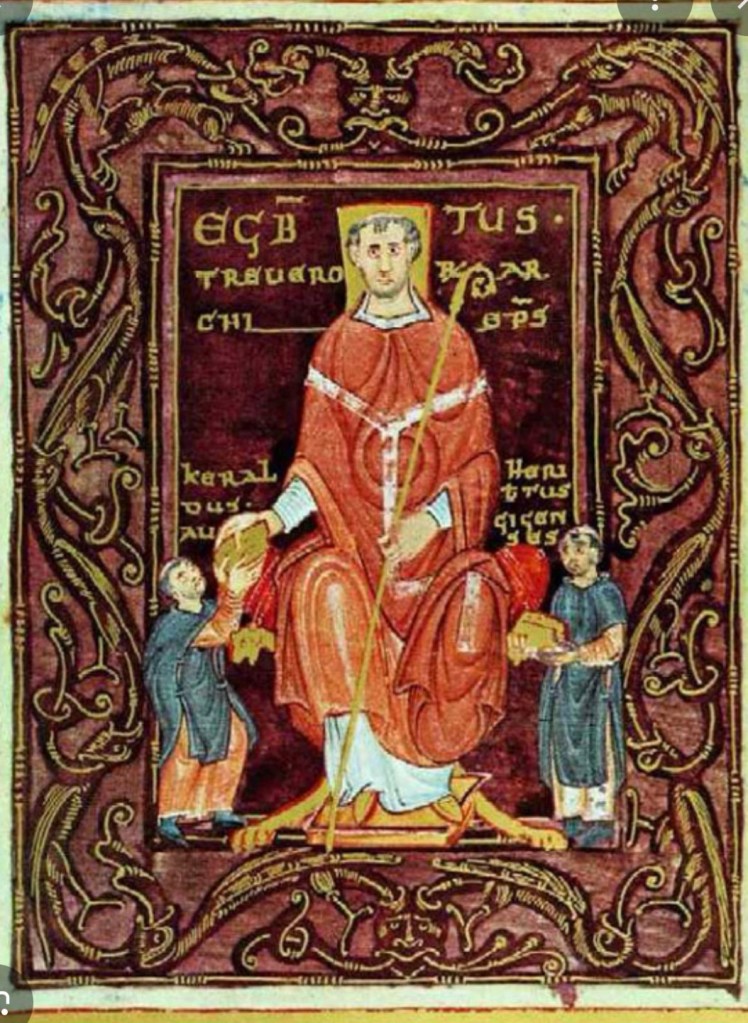
Codex of Egbert
The Ottonian period is a wonderful shift away from the Carolingian focus on classical realism, moving instead toward a symbolic and psychological take on light! Rather than aiming for 3D realism, Ottonian illuminators used rich, saturated colors and highlights to spark emotional and spiritual feelings rather than just optical ones. When painting manuscripts, they really leaned into psychological color and symbolic light.
In places like Reichenau Abbey, artists would lay down gorgeous, jewel-like colors—think ultramarine blues, deep purples, and lush greens—and add lighter touches to make the art glow from within. Instead of light hitting objects from the outside, it felt like divine light was shining straight out of the sacred image. They achieved this through the magic of color psychology rather than the strict logic of shadows and light sources.
Around 990, the Liuthar Circle introduced solid gold backgrounds, which perfectly captured this style! Instead of skies or landscapes, these manuscripts feature fields of burnished gold. This gold isn’t meant to show sunlight or weather; it represents the divine realm and eternal light that goes beyond the physical world. Figures seem to float in this radiant glow, needing no external light and casting no shadows. The gold background completely removes the need for a natural light source.
When it came to highlighting, Ottonian artists used delicate white or light-colored lines on clothing folds and architecture, but always to create a spiritual vibe rather than a realistic one. The highlighting was intentionally non-naturalistic, focusing on theology rather than just what the eye sees.

