A charming style that opens a window into everyday life during the 14th and 15th centuries. This style brought a grand feel to everything from personal prayer books and everyday reading to choir books.
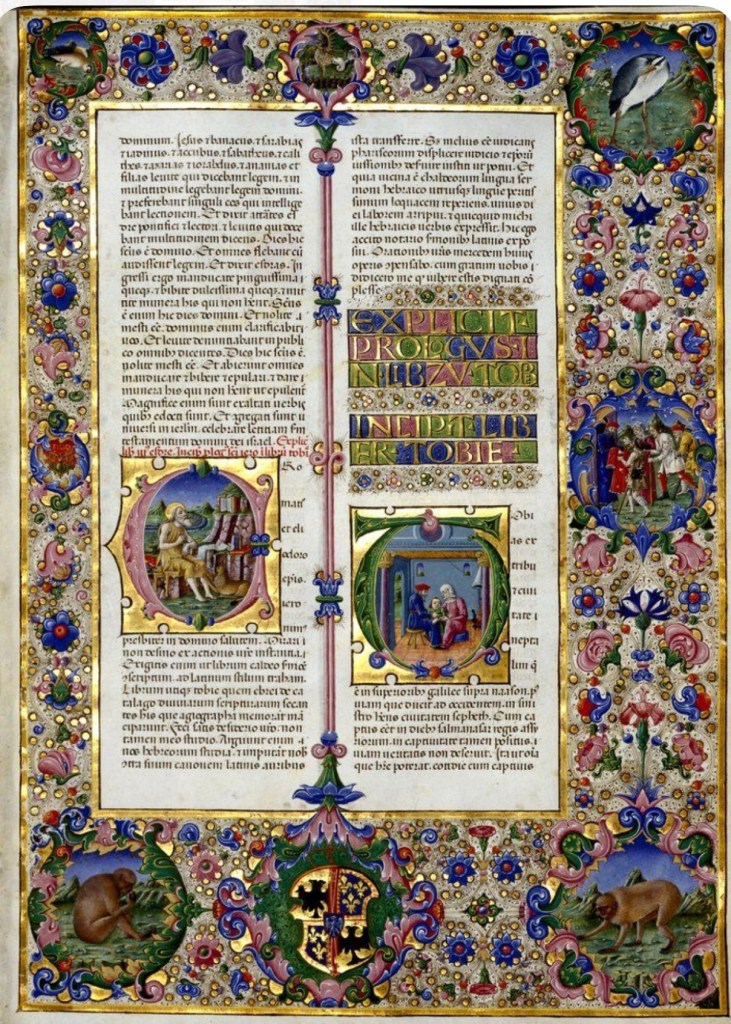
Bible of Borso d Este
By the late 15th and 16th centuries, Renaissance artists working on manuscripts were borrowing cool tricks from panel painting—like perspective and familiar themes. Even though manuscripts kept their own style, illuminators started using chiaroscuro, a neat way of playing with light and shadow to make things look three-dimensional and deep. The bond between manuscripts and panel paintings grew closer, with illuminators picking up fresh ideas from painters.
By the late Renaissance, light was a handy tool for defining shapes and adding clarity. It didn’t just brighten pages—it sharpened details. In a way, light became the star: artists loved exploring how shadows hint at depth and how light reveals form.
The dance of light and dark across people and landscapes became more dramatic and realistic, matching how light really looks. Artists like Leonardo da Vinci helped spread techniques such as sfumato—soft, blended edges that make images feel lifelike. While Leonardo’s ideas shone brightest in panels and drawings, they gently shaped manuscript work too. Light stopped being just a symbol or decoration; it became a natural force guided by optics and atmosphere.

